
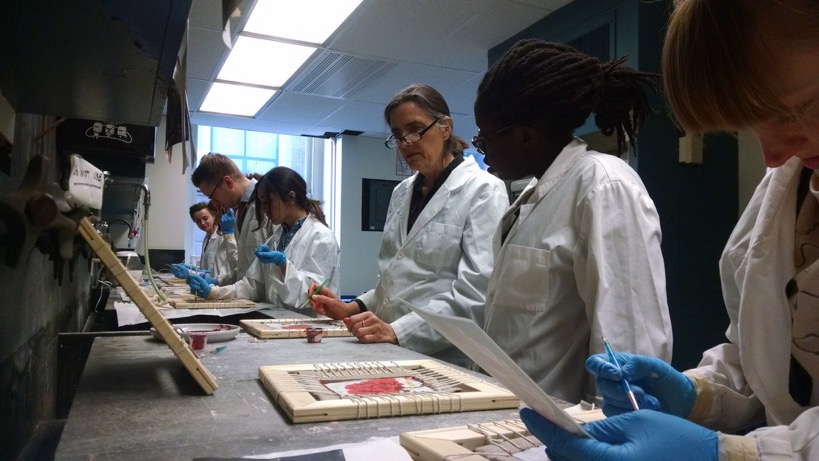
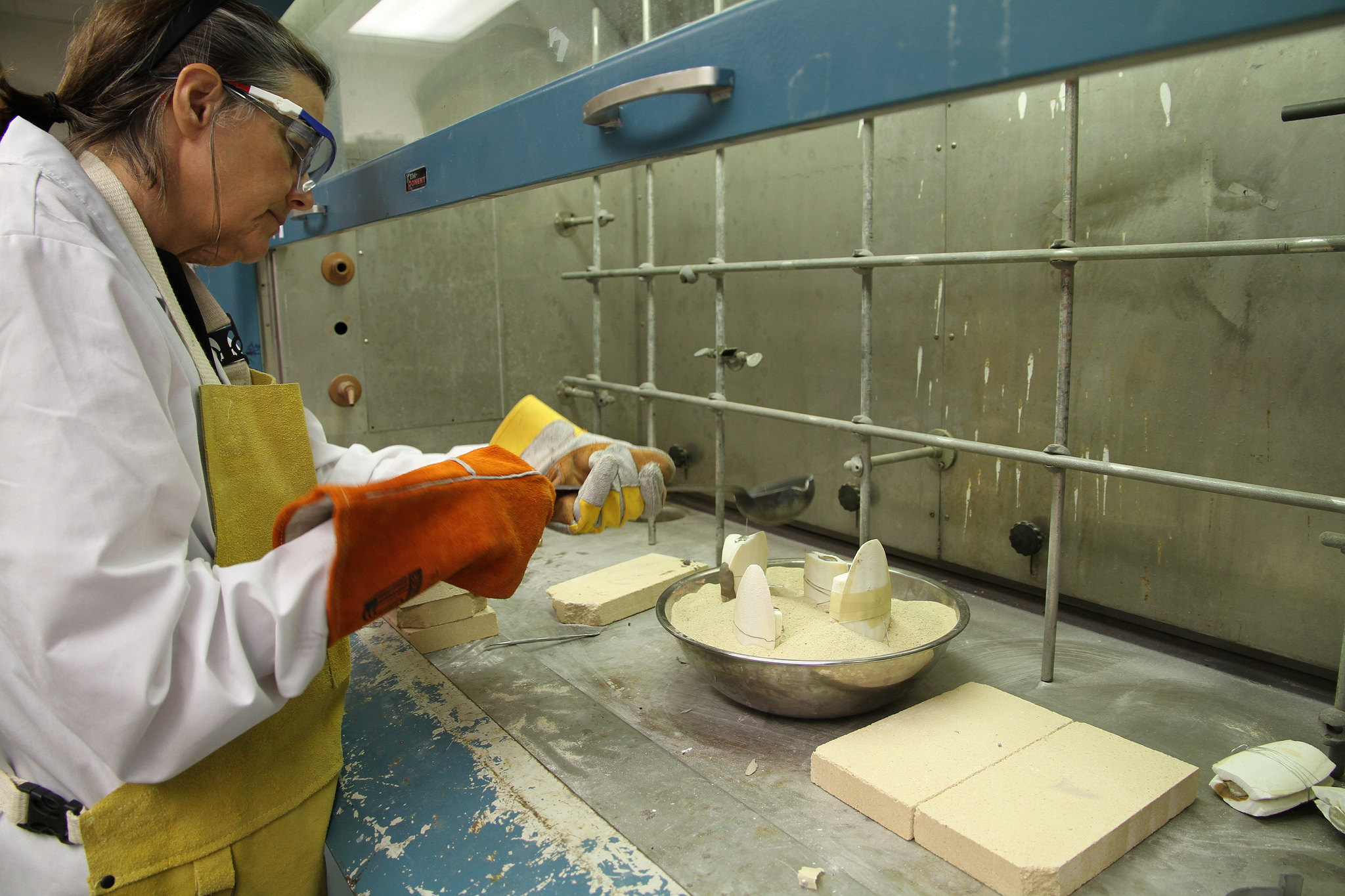
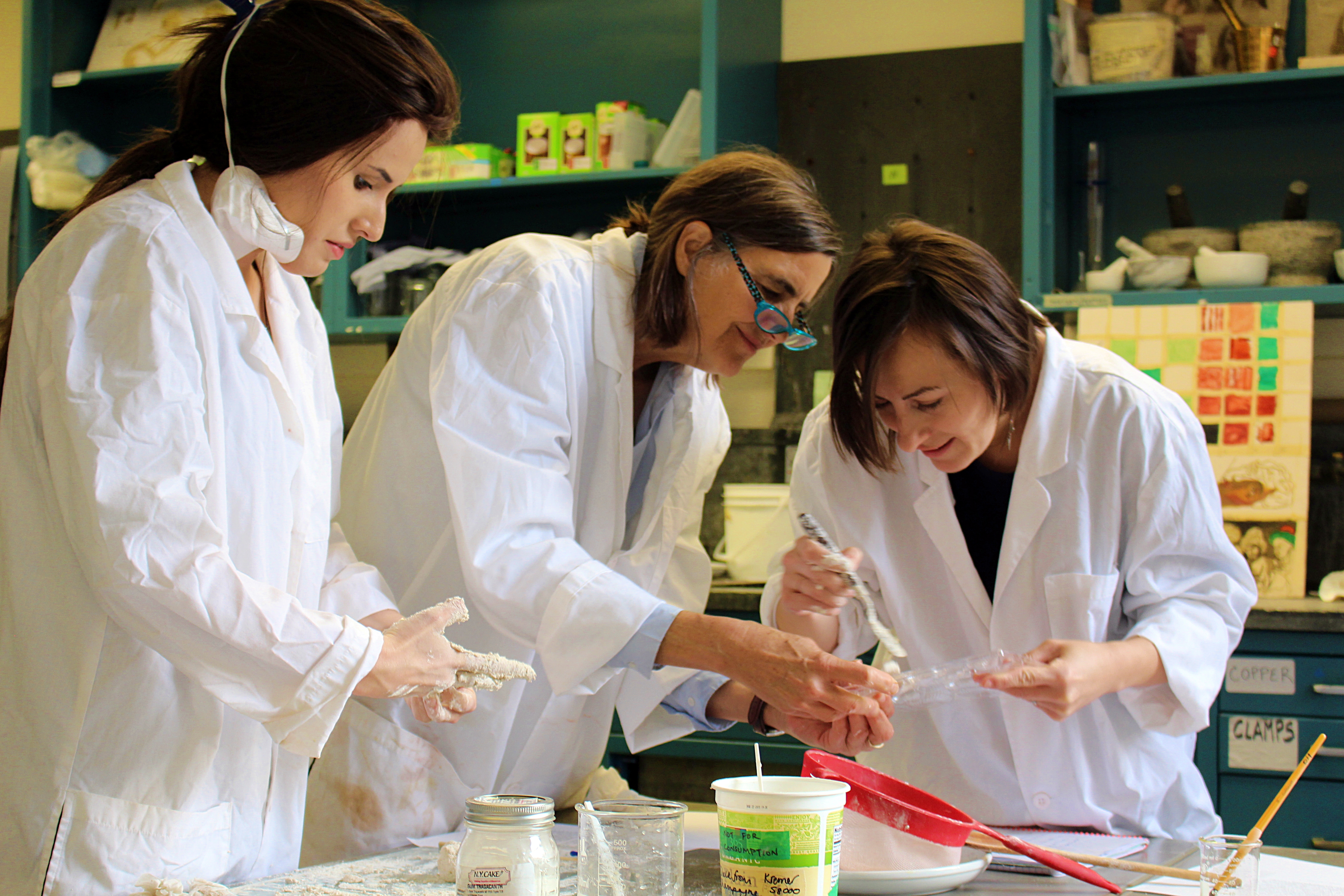
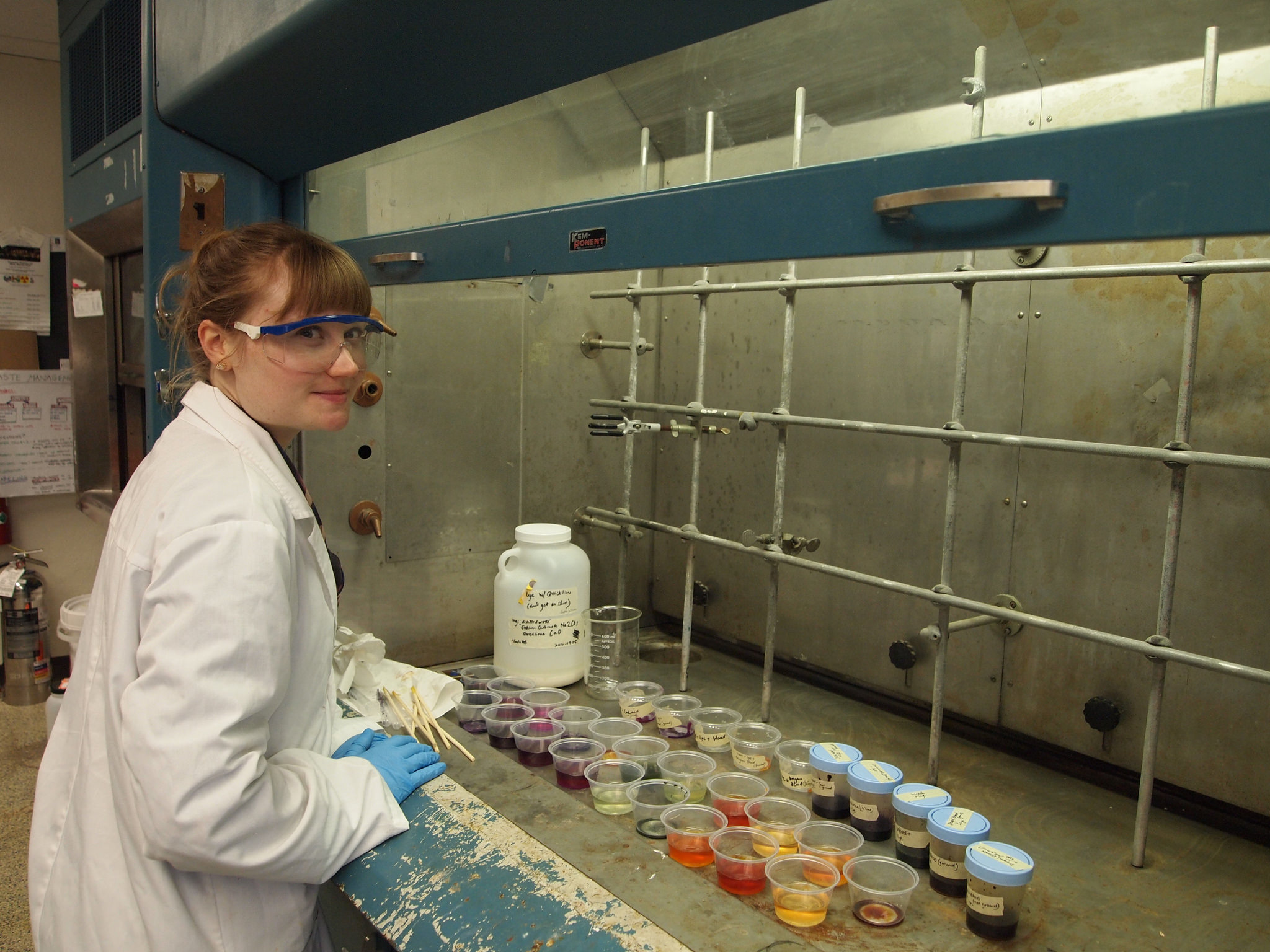
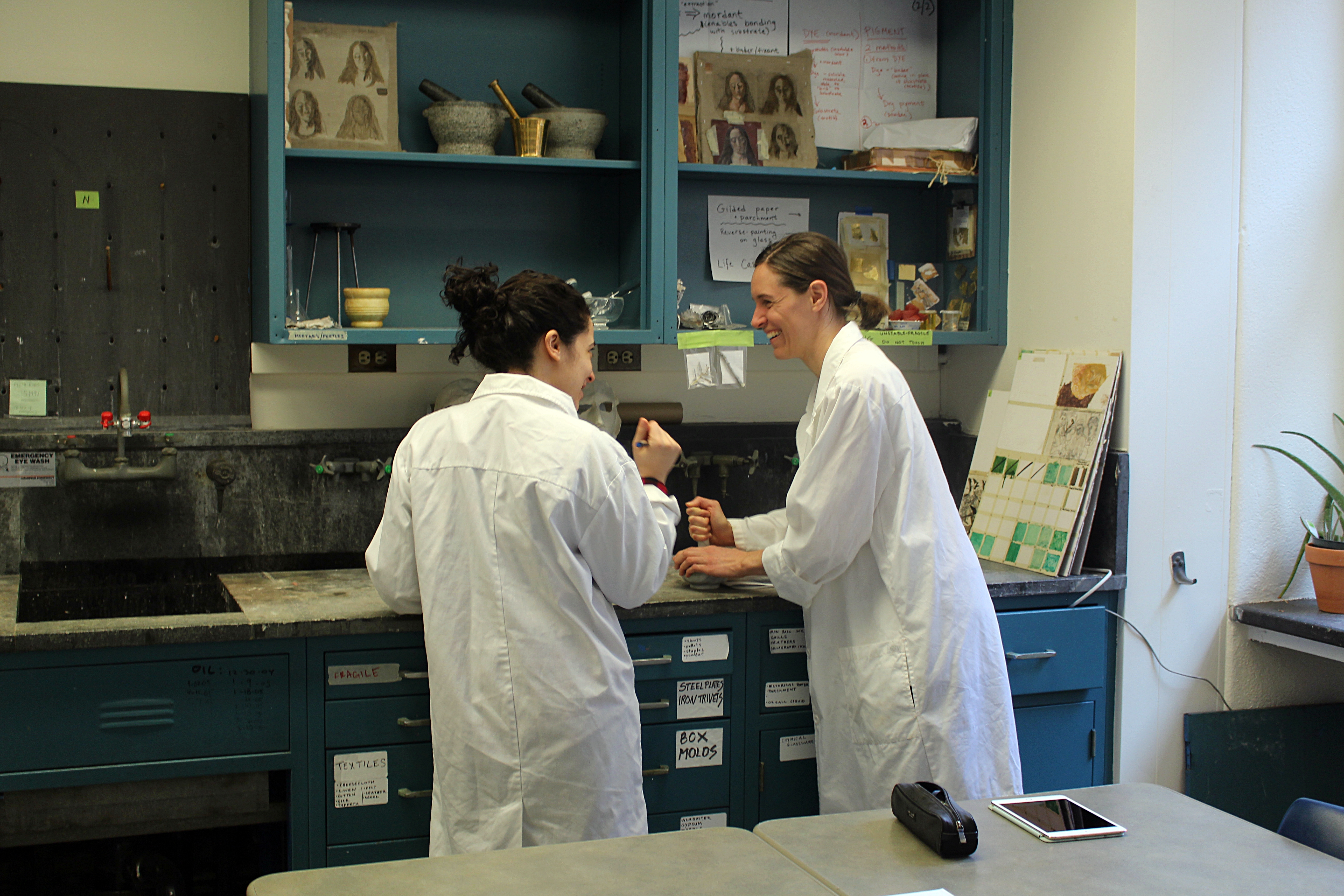
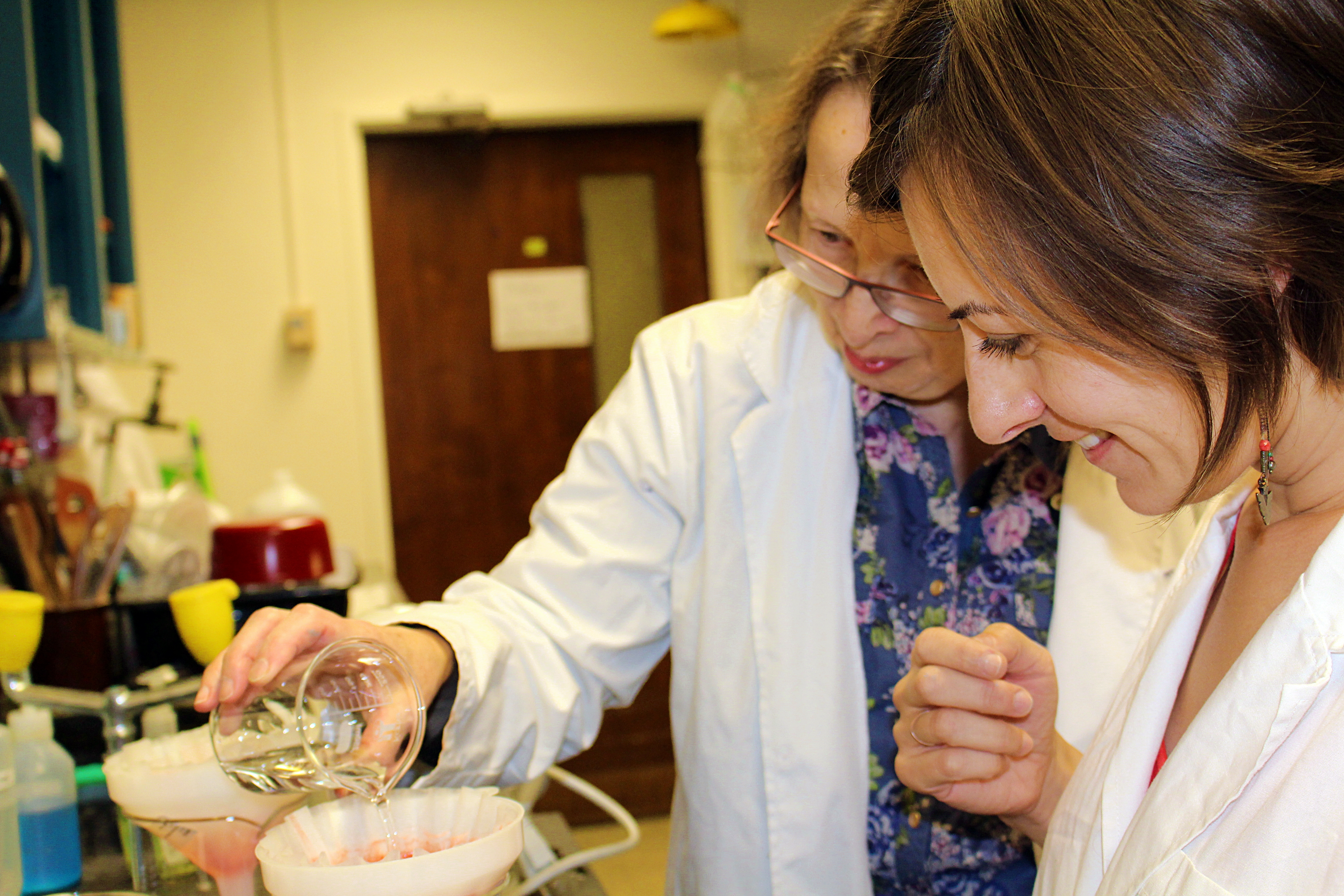
Hands-on research into, and reconstruction of, the materials and techniques described in the BnF Ms. Fr. 640 manuscript are carried out through seminars held in a laboratory at Columbia University, led by Seth Low Professor of History Pamela Smith. The original laboratory seminar HIST G8906: Craft and Science: Making Objects in the Early Modern World was offered to graduate students. The course combines historical research on fifteenth- and sixteenth-century sources with hands-on work in the laboratory, carrying out historical reconstruction research. The course includes discussions of primary and secondary sources drawn from material culture studies, anthropology, history of science and technology, and art history, as well as hands-on work in the laboratory.
Using the transcription and translation produced in the Paleography Workshops, the laboratory seminars focused each year on a set of related techniques described in the manuscript. In 2014-15, the focus was on Moldmaking and Metalworking (e.g., portrait medal casting, sand casting, and box molding); in 2015-16, it was on Colormaking (including dyes, pigments, artificial gems, coloring woods and metals, and varnish making); in 2016-17, Practical Knowledge: Vernacular Natural History, Practical Perspective, Optics, Mechanics, and Medicine; in 2017-2018, the theme was Ephemeral Art; in 2018-2019, the theme was Printmaking, Inscription and Impression.
Work in the laboratory each semester begins with skill building activities, then expert makers lead the students in hands-on research for two weeks. These experts are artists, conservators, or craftspeople who have studied historic techniques in areas relevant to the manuscript. Their expertise provided a crucial link to the text for the students and scholars working in the laboratory, and their contributions are invaluable for assisting in performing reconstructions and in the critical annotation of the manuscript.
The process of translation from words into actions, and the multiple issues it raises, provides valuable lessons about translation itself (in its many meanings in this project), about experiential knowledge, and about methodologies of research in history to the students in the courses, and, more generally to scholars in multiple fields. The participants’ grappling with these issues were reflected in electronic field notes, images, and video footage as part of the diverse media of the digital edition of the manuscript.
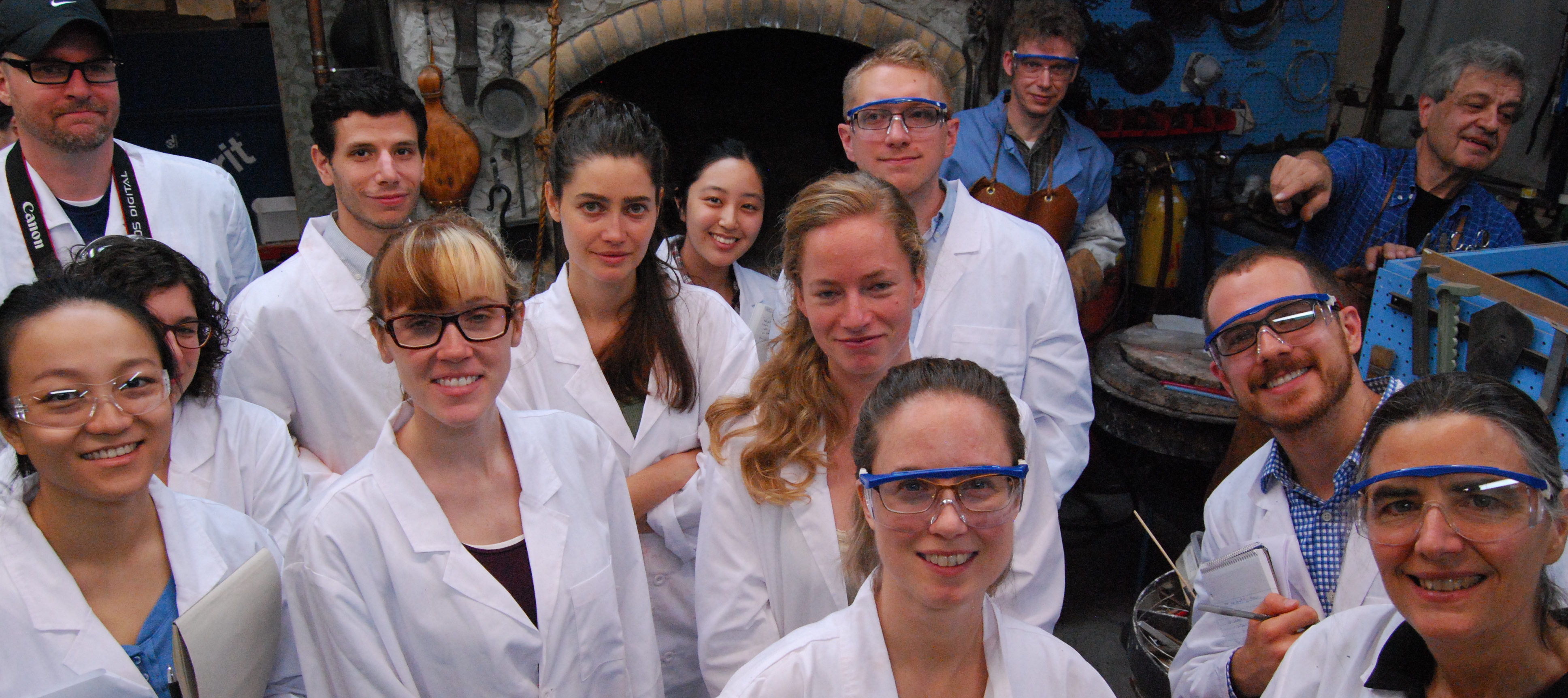
After the publication of the digital critical edition, the Project offered a redesigned laboratory seminar open to undergraduate students from fall 2021 onward. HIST GU4962 Making and Knowing in Early Modern Europe: Hands-On History continued many of the main topics and activities from the original laboratory seminar. Instead of a semester theme, students created a capstone project.
These exploratory and experimental projects offer new ways of engaging with the digital critical edition and extending the course themes to new topics. Students in past classes have produced digital/textual analysis of Ms. Fr. 640 manuscript, reconstruction insight reports, videos, lesson plans, and many other original and creative projects. Many of these projects can be found via the Research and Teaching Companion.
Learn More
- The digital critical edition, Secrets of Craft and Nature in Renaissance France, is openly accessible
- Past student projects, activity sheets, assignments, and reconstruction protocols are available via the Research and Teaching Companion
- Follow our progress in the lab on our Twitter feed and our photo repository on Flickr.
- Lab Seminar Participants
Syllabi
- Fall 2014 Moldmaking and Metalworking Syllabus
- Spring 2015 Moldmaking and Metalworking Syllabus
- Fall 2015 Colormaking Syllabus
- Spring 2016 Colormaking Syllabus
- Fall 2016 Practical Knowledge Syllabus
- Spring 2017 Practical Knowledge Syllabus
- Fall 2017 Ephemeral Art Syllabus
- Fall 2018 Impression Syllabus
- Summer 2021 Hands-On History Syllabus
- Fall 2021 Hands-on History Syllabus
- Spring 2022 Hands-on History Syllabus
- Spring 2023 Hands-on History Syllabus
- Fall 2024 Hands-on History Syllabus
- Fall 2025 Hands-on History Syllabus
- Spring 2026 Knowledge and Materiality in the Early Modern World Syllabus