The Making and Knowing Project has hosted two dyeing and weaving collaborations.
Indigenous Knowledge Holders Residencies
In 2024 and 2025, the Project hosted Indigenous knowledge holders, Bertha Estrada Huipe and her son Mateo Estrada Rodriguez from Michoacán, Mexico.
With over 35 years of experience, Bertha is one of the world’s leading practitioners of Purépecha dyeing and weaving techniques. These traditions, practiced by the Purépecha of Michoacán were fading before being revitalized by Bertha’s mother-in-law Cecilia Bautista Caballero. Bertha has continued Cecilia’s work, seeking to preserve this intangible heritage.
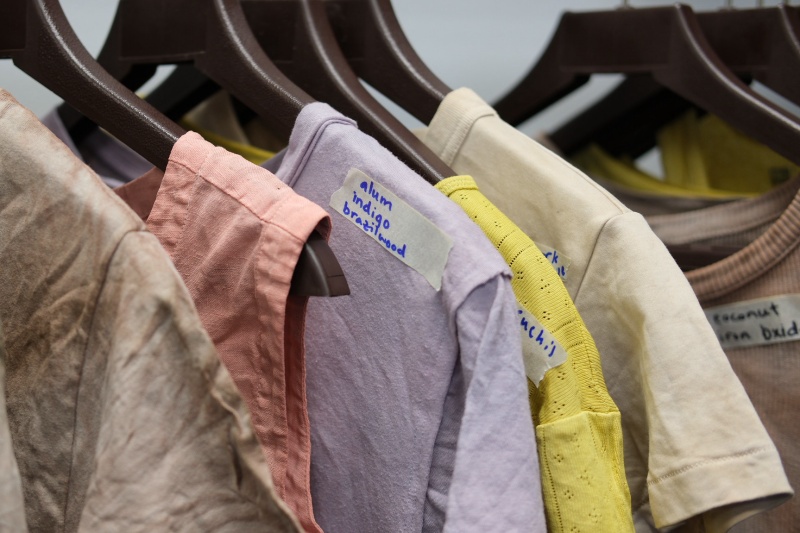
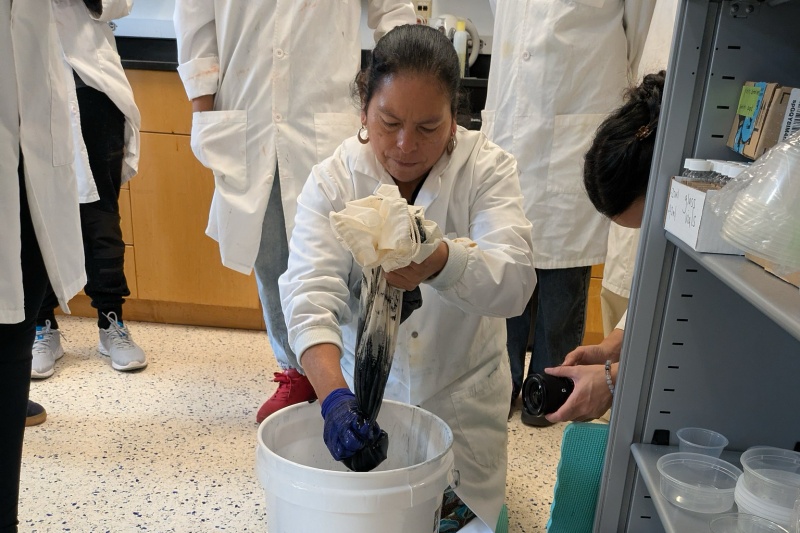
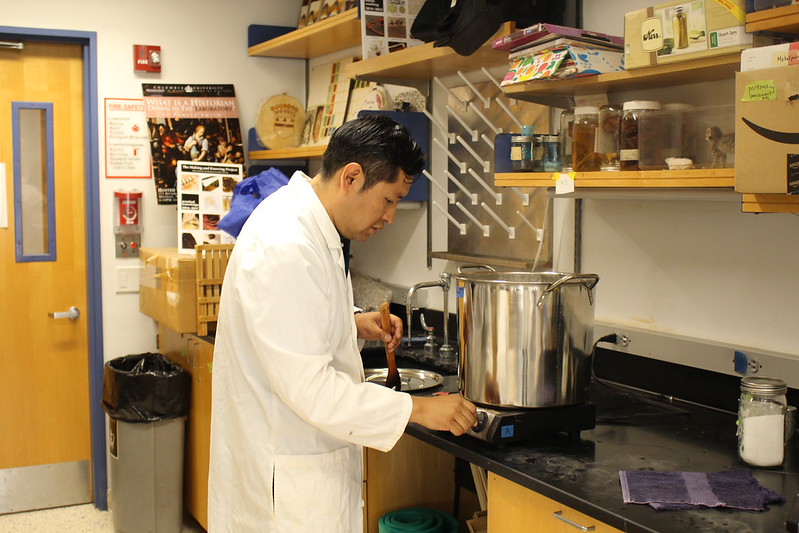
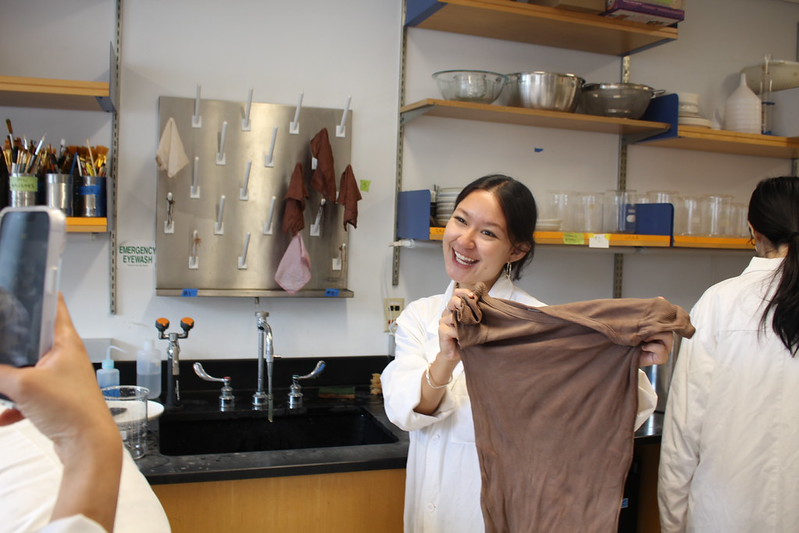
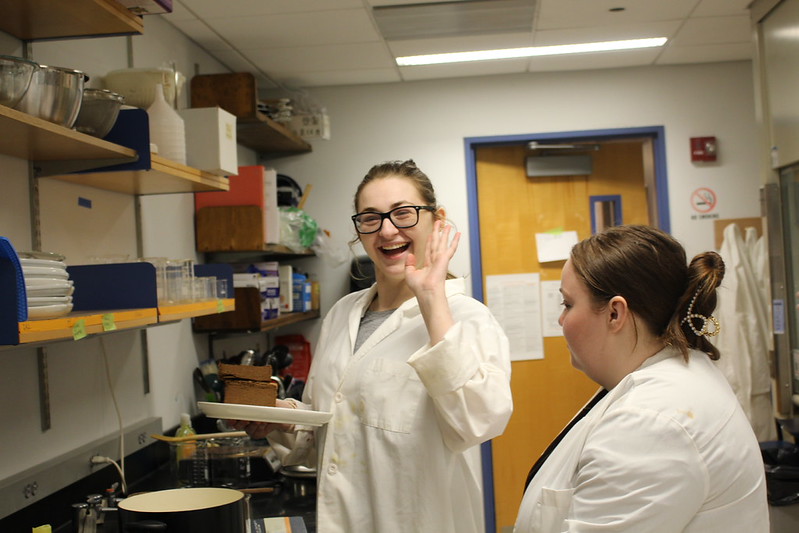
Bertha and Mateo shared their embodied knowledge with students and scholars in the Project’s laboratory seminar. Students learned about natural dye materials (including, among others, marigold flowers, coconut husks, and pomegranate peels), techniques, and the many forms of knowledge embedded in dyeing and weaving. During the 2025 residency, students and guests also had the opportunity to weave using a backstrap loom.
Other activities in 2024 included a public dyeing showcase, presentations at the Colloquium for Latin American History, and museum visits. The 2025 residency was expanded with two additional public events exploring the environmental harms of the contemporary textile industry and the connection between Indigenous language revitalization and craft practices.
Support for the 2024 residency came from the Columbia Climate School and the Luce Foundation.
Support for the 2025 residency came from the Institute of Latin American Studies, Institute for Religion, Culture and Public Life, Institute for Social and Economic Research and Policy at Columbia University, and the Luce Foundation.
Weaving Knowledge Workshops
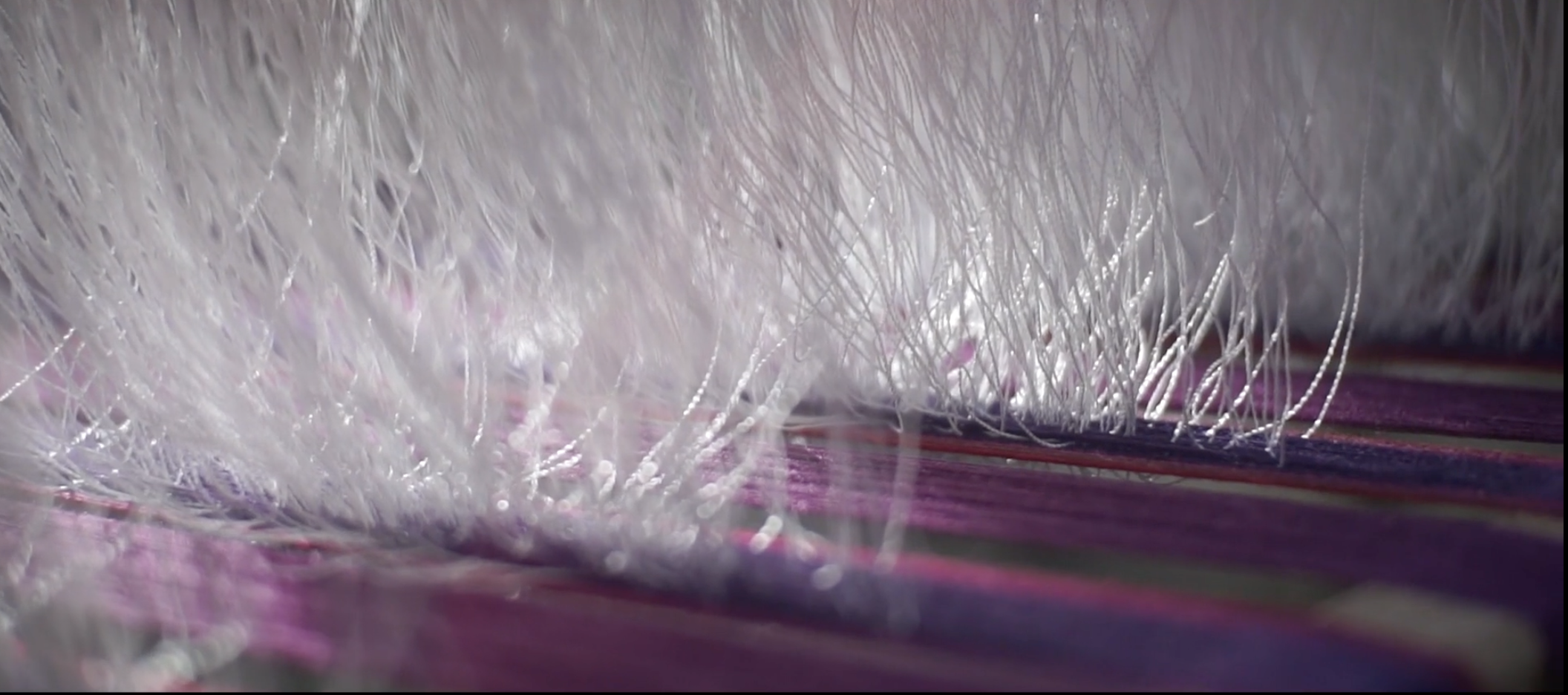
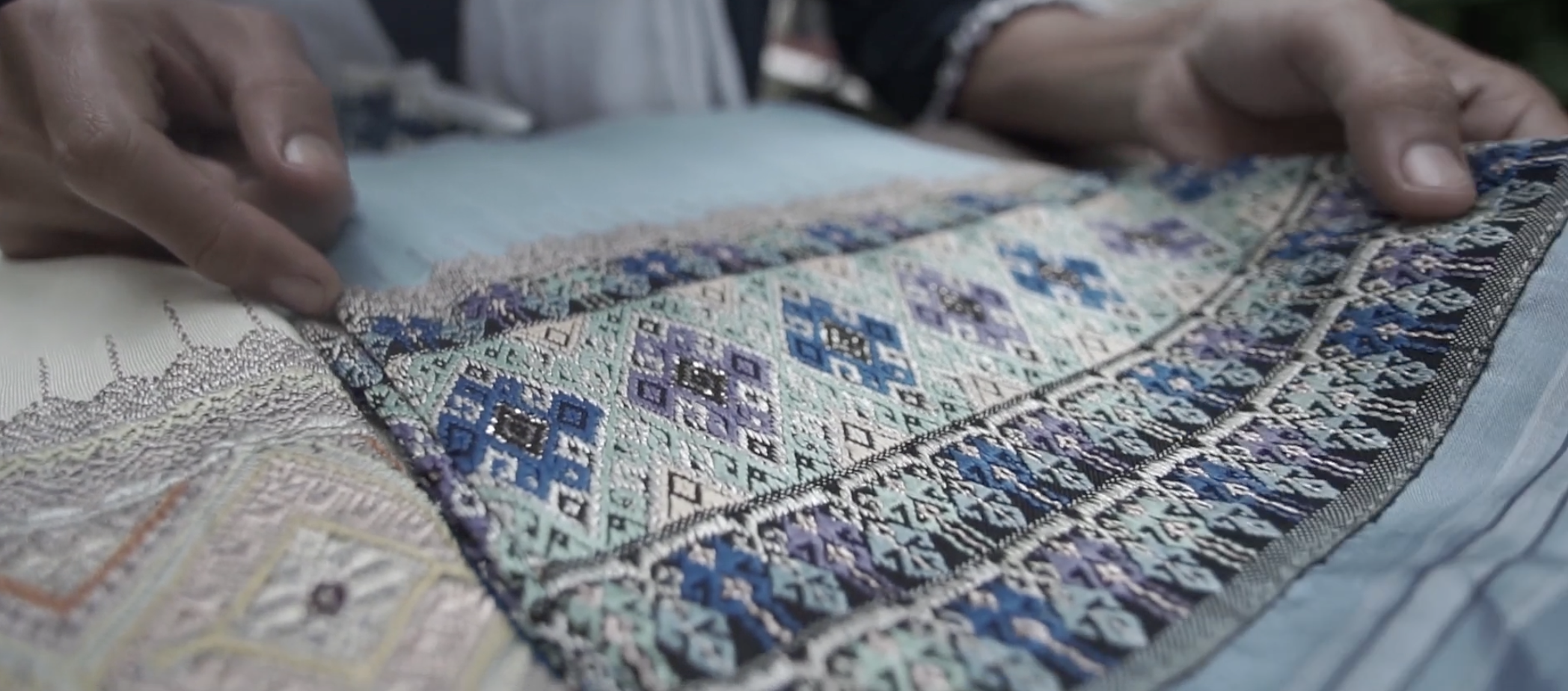
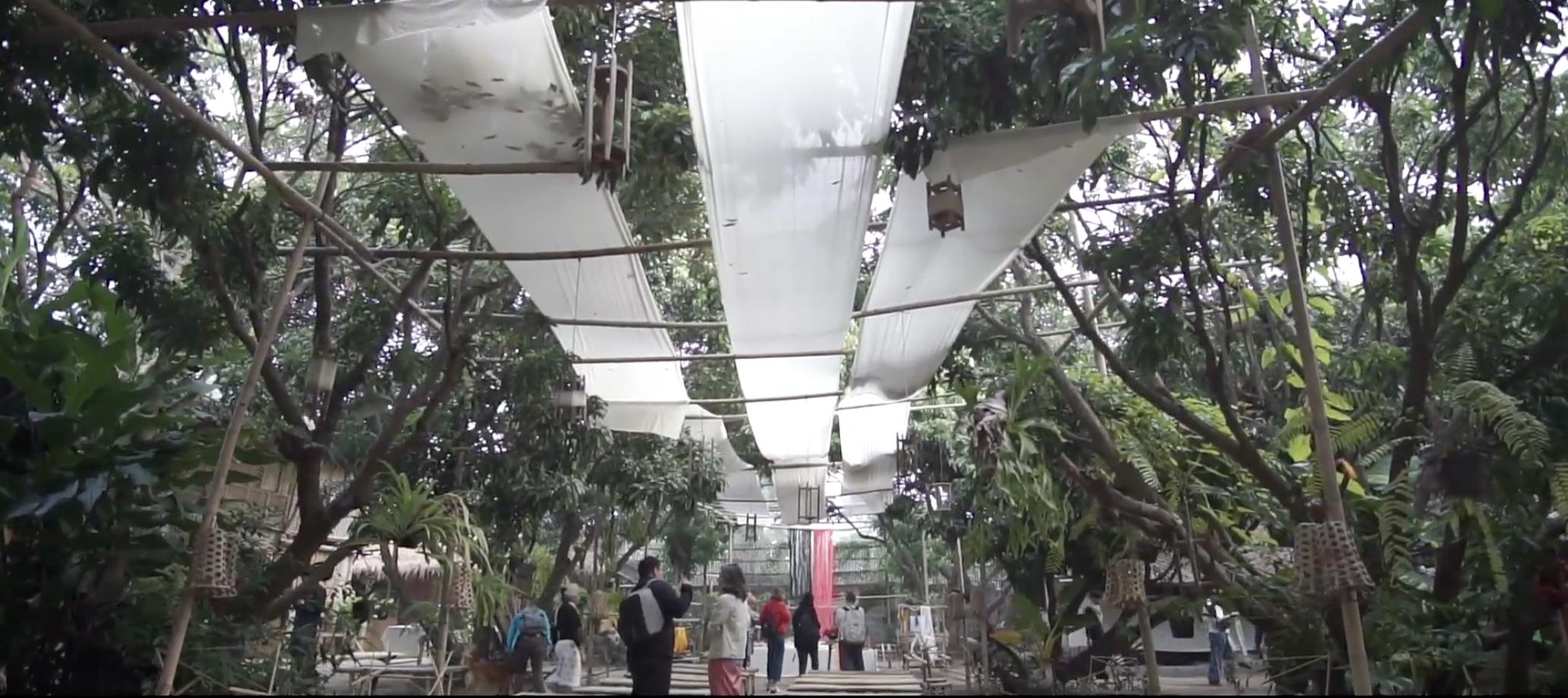
In 2017 and 2019, the Project co-hosted two Weaving Knowledge Workshops in Chiang Mai, Thailand. These two-week workshops immersed international PhD students and the Project’s postdoctoral scholars in traditional Thai weaving. Participants learned to dye with natural colorants (including indigo, turmeric, and jackfruit bark), prepare and warp a loom, and practiced a variety of weaving techniques and patterns. While instruction focused on Lanna weaving techniques, visits to the Lua and Karen communities provided insights into other Indigenous weaving practices.
Hands-on instruction was complemented by formal discussions led by weavers, scholars, and activists. The workshops challenged knowledge hierarchies that privilege academic research over craft expertise. Together, participants reflected on the challenges of articulating embodied craft knowledge and how such knowledge can be fully integrated into academic research and teaching.
The workshops were organized in collaboration with Nussara Tiengkate (weaver and textile historian) and Annapurna Mamidipudi (Postdoctoral Researcher at the Technical University of Berlin).
Support for the workshops came from Chiang Mai University, the Dorothy Borg Research Program at Columbia University, and the International Institute for Asian Studies.
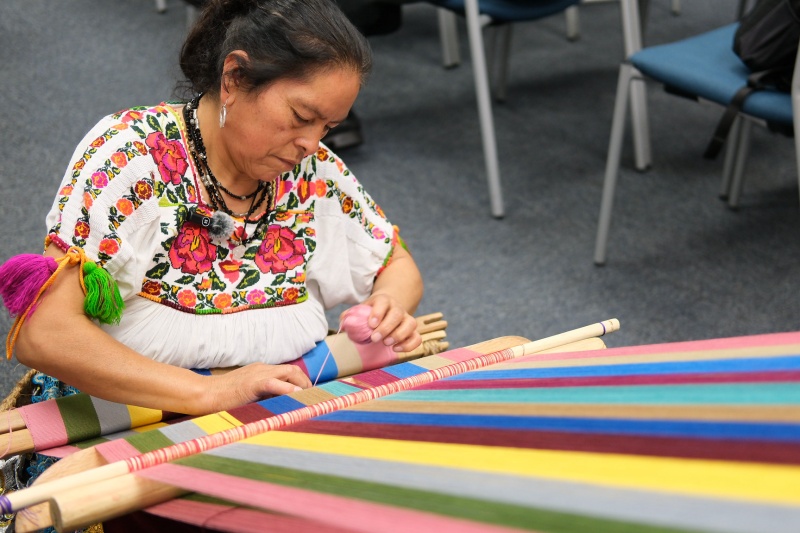
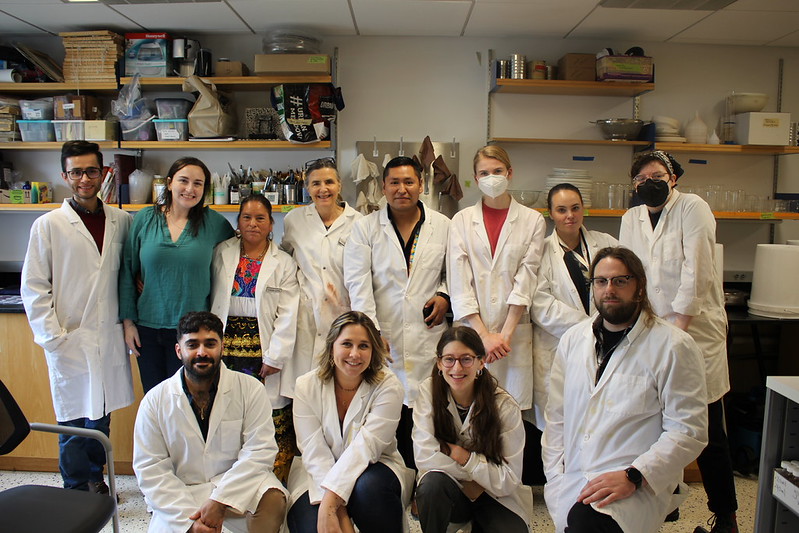
In 2024 and 2025, the Project hosted Indigenous knowledge holders, Bertha Estrada Huipe and her son Mateo Estrada Rodriguez from Michoacán, Mexico.
With over 35 years of experience, Bertha is one of the world’s leading practitioners of Purépecha dyeing and weaving techniques. These traditions, practiced by the Purépecha of Michoacán were fading before being revitalized by Bertha’s mother-in-law Cecilia Bautista Caballero. Bertha has continued Cecilia’s work, seeking to preserve this intangible heritage.
Bertha and Mateo shared their embodied knowledge with students and scholars in the Project’s laboratory seminar. Students learned about natural dye materials (including, among others, marigold flowers, coconut husks, and pomegranate peels), techniques, and the many forms of knowledge embedded in dyeing and weaving. During the 2025 residency, students and guests also had the opportunity to weave using a backstrap loom.
Other activities in 2024 included a public dyeing showcase, presentations at the Colloquium for Latin American History, and museum visits. The 2025 residency was expanded with two additional public events exploring the environmental harms of the contemporary textile industry and the connection between Indigenous language revitalization and craft practices.
Support for the 2024 residency came from the Columbia Climate School and the Luce Foundation.
Support for the 2025 residency came from the Institute of Latin American Studies, Institute for Religion, Culture and Public Life, Institute for Social and Economic Research and Policy at Columbia University, and the Luce Foundation.


Weaving Knowledge Workshops
In 2017 and 2019, the Project co-hosted two Weaving Knowledge Workshops in Chiang Mai, Thailand. These two-week workshops immersed international PhD students and the Project’s postdoctoral scholars in traditional Thai weaving. Participants learned to dye with natural colorants (including indigo, turmeric, and jackfruit bark), prepare and warp a loom, and practiced a variety of weaving techniques and patterns. While instruction focused on Lanna weaving techniques, visits to the Lua and Karen communities provided insights into other Indigenous weaving practices.
Hands-on instruction was complemented by formal discussions led by weavers, scholars, and activists. The workshops challenged knowledge hierarchies that privilege academic research over craft expertise. Together, participants reflected on the challenges of articulating embodied craft knowledge and how such knowledge can be fully integrated into academic research and teaching.
The workshops were organized in collaboration with Nussara Tiengkate (weaver and textile historian) and Annapurna Mamidipudi (Postdoctoral Researcher at the Technical University of Berlin).
Support for the workshops came from Chiang Mai University, the Dorothy Borg Research Program at Columbia University, and the International Institute for Asian Studies.